-
The 4th Asia-Pacific Regional Conference on Service-Learning : Conference Special Issue 第四屆亞太地區服務研習會議 : 會議特刊
Office of Service-Learning, Lingnan University
The 4th Asia-Pacific Regional Conference on Service-Learning, titled “Service-Learning as a Bridge from Local to Global: Connected World, Connected Future” has been held in June, 2013. In this Special Issue, we will guide you through our conference, including the highlights, the accomplishments; the knowledge gained, the experience shared, and most importantly, the sharing from our participants.
第四屆亞太地區服務研習會議 - 「以服務研習為橋樑:由本地出發,聯繫世界,銜接未來」於2013年6月順利舉行。本特刊回顧4天的會議點滴,當中包括:會議摘要及成果、交流的知識及經驗,當然還有與會者的分享。
-
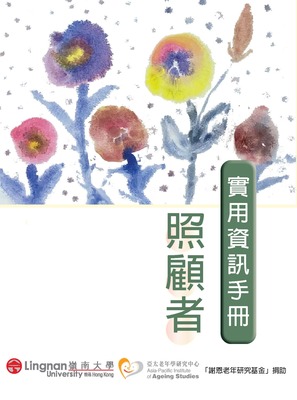
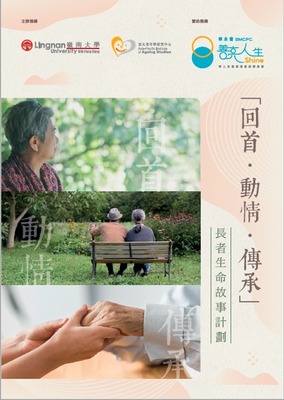
以長者學苑為本的其他學習經歷實用手冊
Office of Service-Learning, Lingnan University; Asia-Pacific Institute of Ageing Studies, Lingnan University; Lingnan Education Organization; Cheung Ming, Alfred CHAN; Hok Ka Carol MA; and Lai Kuen, Stella WONG
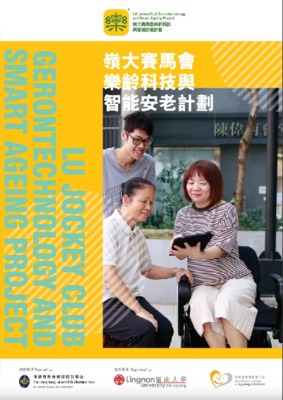
嶺南大學累積幾年來實踐長者學苑計劃的經驗,聯同其姊妹及區內長者學苑共編寫《以長者學苑為本的其他學習經歷實用手冊》。手冊可作為參與長者學苑計劃或有興趣該計劃團體的一個指引,增加在如何推行及設計與長者學苑相關的課程及學習活動方面的認識。本手冊更協助推廣跨界別合作互動學習的模式,讓更多長者及學生受惠。
-
A handbook for using elder academy as a platform of other learning experiences
Office of Service-Learning, Lingnan University; Asia-Pacific Institute of Ageing Studies, Lingnan University; Lingnan Education Organization; Cheung Ming, Alfred CHAN; Hok Ka, Carol MA; Lai Kuen, Stella WONG; Ka Man, Carman CHAN; Wing Yee, Nans LEUNG; Hau Hing, Elaine TANG; and Miu Ching, Wendy HO
This handbook will discuss how school syllabus, Other Learning Experiences (OLE) and Elder Academy (EA) can be integrated. It will provide some structures for schools as a reference and help develop a comprehensive learning plan. Besides, the handbook will mention different roles and responsibilities of stakeholders, as well as the suggestions and guidelines for assessment.
The programs and activities in the “Elder Academy at Lingnan” will be taken as examples to demonstrate the guidelines. This can provide a better understanding of the operation mode of the integration between school curricula, OLE and EA. Hence, interested stakeholders can perform their own plans more systematically and effectively.
-
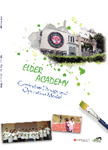
Elder academy : curriculum design and operation model = 長者學苑 : 課程設計與運作模式
Office of Service-Learning, Lingnan University; Asia-Pacific Institute of Ageing Studies, Lingnan University; Lingnan Education Organization; Cheung Ming, Alfred CHAN; Hok Ka, Carol MA; Lai Kuen, Stella WONG; Wing Yee, Nans LEUNG; Hau Hing, Elaine TANG; Miu Ching, Wendy HO; Marc Craig LEBANE; Emily ENDRES; John FRAIER; and Katy SAUER
Ever since the launching of the Elder Academy in 2007, numerous schools have joined the fray bringing with them valuable innovations, presenting the elderly and students with a wide variety of educational activities. The experiences of the Elder Academy at Lingnan and other academies are summarized in this handbook, in order to provide a frame of reference and an operation guide for other schools and organizations, so that they may design their own comprehensive teaching and learning plans.
In this handbook, the roles and responsibilities of participating organizations are explained, and there are guidelines and suggestions regarding assessment methods. Apart from the instructions on teaching and learning activities, examples of course syllabi and activities are also included to offer some insights into the operation of the schools and their courses, allowing institutions to better carry out similar projects in a more systematic manner.
-
長者學習研究計劃2011-2012 : 學員作品集
Office of Service-Learning, Lingnan University 嶺南大學服務研習處; Asia-Pacific Institute of Ageing Studies, Lingnan University 嶺南大學亞太老年學研究中心; Cheung Ming, Alfred CHAN; Hok Ka, Carol MA; Lai Kuen, Stella WONG; and Wing Yee, Nans LEUNG
有見長者的學歷及學習能力日高,長者的需求亦有所不同,對長者需求的研究實是需要的。加上部份長者表示希望參與較高層次的學習活動及貢獻社會,故嶺南大學服務研習處舉辦長者學習研究計劃2011-2012,培訓長者成為研究人員,期望由長者的角度出發,為長者學習 的長遠發展作出研究及提出建議。
/="/">
/="/">計劃目標:
/="/">• 培養長者對學術研究的興趣;
/="/">• 提供研究技巧培訓課程;
/="/">• 分析學苑現有課程的成效;
/="/">• 探討長者學習的政策及制定長遠發展方向;
/="/">• 透過長幼參與研究計劃,增加兩代溝通,促進跨代共融。
/="/">
/="/">本作品集收錄了有關計劃中,長者學員們所撰寫的研究報告。
/="/">
/="/"> -
長者學習研究計劃2011-2012 : 計劃介紹及教材冊
Office of Service-Learning, Lingnan University 嶺南大學服務研習處; Cheung Ming, Alfred CHAN; Hok Ka, Carol MA; Lai Kuen, Stella WONG; and Wing Yee, Nans LEUNG
有見長者的學歷及學習能力日高,長者的需求亦有所不同,對長者需求的研究實是需要的。加上部份長者表示希望參與較高層次的學習活動及貢獻社會,故嶺南大學服務研習處舉辦長者學習研究計劃2011-2012,培訓長者成為研究人員,期望由長者的角度出發,為長者學習 的長遠發展作出研究及提出建議。
/="/">
/="/"> 計劃目標:
/="/"> • 培養長者對學術研究的興趣;
/="/"> • 提供研究技巧培訓課程;
/="/"> • 分析學苑現有課程的成效;
/="/"> • 探討長者學習的政策及制定長遠發展方向;
/="/"> • 透過長幼參與研究計劃,增加兩代溝通,促進跨代共融。
/="/">
/="/">本手冊收錄了有關計劃詳情以及課程教材。
-
Integrated learning programme 2012-2013 : term 2
Student Services Centre
This Integrated Learning Programme(ILP) guidebook provides details about ILP courses offered during 2012-2013 second term in Lingnan University, Hong Kong.
-
Integrated learning programme 2013-2014 : term 1
Student Services Centre
This Integrated Learning Programme(ILP) guidebook provides details about ILP courses offered during 2013-2014 first term in Lingnan University, Hong Kong.
-
嶺南大學創校125週年紀念特刊 = Lingnan 125 Glorious Years
嶺南大學三藩市同學會簡報出版組
此特刊為三藩市同學會簡報第68期的副刊, 以嶺南大學創校125周年紀念為題的特刊。內附嶺南檔案史料系列 007-009號, 另附有其他文章及珍貴歷史圖片, 總結嶺南大學自1888年創校至今125年的各重要紀事及人物。
-
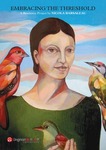
Embracing the threshold
Nicola BARSALEAU
Our Lingnan residency, now in its fourth month, is a comprehensive exploration of creativity in day-to-day living. Creativity satisfies a portion of vital human needs: the need for autonomy, adventure, celebration, community, play, and spiritual harmony. Contemplating our artistic self is healthy. In some cases, artistic activity can be immensely healing, leading towards wholeness, balance, and integration. This project was enacted at both a communal and personal level for many of the participants, including myself.
Our own individual life force flows through us in intriguingly personal ways. We all have unique gifts to offer and uncover that no other person exactly has. Yet I have discovered here at Lingnan some dimensions in which we are beautifully similar. For example, observing the students and their individual artistic processes taught me that we all seem to go through a similar creative progression; embracing the threshold of creativity head-on moves us forward, even if sometimes it’s a bumpy ride. Faced with an unknown outcome, we may feel a dissonance, even anxiety, as we try to gain momentum. Yet through the very process of embracing mystery and challenge, and by being attentive to higher principles, we journey into surprising places. Transformation surrounds us, and as we listen and respond to our deeper creative self, significant movement and internal shifting occurs.
During my residency at Lingnan, I’ve been touched by the prevailing mood of service and concern, the depth and determination of the individual students, and the natural graciousness in everyone I’ve met. I hope you will enjoy the celebration showcased in this presentation.
-
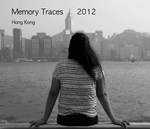
Memory Traces 2012 : Hong Kong
Department of Visual Studies, Lingnan University
Memory Traces is a photography book project which comprises a collection of images created by students of Jack Picone during a studio practice class at Lingnan University. The collective body of work is an exploration of a wide array of themes based on each student's own personal interests.
-
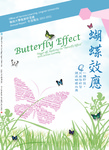
2011-2012 Annual Report 年度報告
Office of Service-Learning, Lingnan University
Butterfly Effect Trigger, Realizing the "Butterfly Effect" with Service-Learning
With the theme of “Butterfly Effect – Trigger off, Realizing the ‘Butterfly Effect’ with Service-Learning”, this issue will let you know how we facilitated life development and interaction of young generation.
蝴蝶效應一觸即發,從服務研習體現蝴蝶效應
此年報以「蝴蝶效應 – 一觸即發,從服務研習體現蝴蝶效應」為主題,呈現出我們對生命交流和協作的重視,並致力培育年輕人的成長。
-
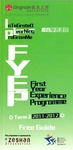
Integrated learning programme 2011-2012 : term 2
Student Services Centre
This Integrated Learning Programme(ILP) guidebook provides details about ILP courses offered during 2011-2012 second term in Lingnan University, Hong Kong.
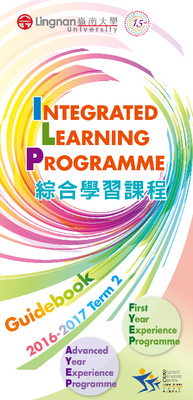
The guidebook is in green & purple two-tone and has inverted design; it featured the introductioon of Advanced Year Experience Programme (AYEP) in Lingnan University.
-
Integrated learning programme 2012-2013 : term 1
Student Services Centre
This Integrated Learning Programme(ILP) guidebook provides details about ILP courses offered during 2012-2013 first term in Lingnan University, Hong Kong.
-
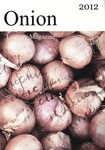
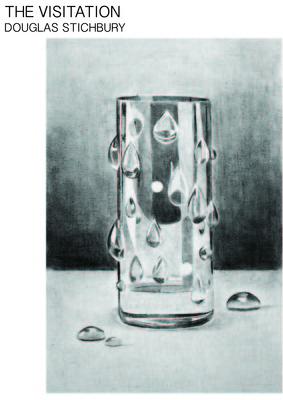
Onion : literary magazine
Undergraduate majors, Bachelor of Arts (Honours) in Contemporary English Studies (2011-2012), Lingnan University
Words from Douglas
Hong Kong is often stereotyped as a place without much culture - all hard-eyed pragmatic bankers, no artists - but that has not been my experience. This is a place surging with creativity, and with a drive to find artistic expression, in words and other media. The stereotype may even have the effect of dampening some potential writers' enthusiasm for creative expression, but not in the English Department at Lingnan University, and, my impression is, not at other Hong Kong universities either. We have waves of students who come to us already loving to write - in English, which for most is a second language - and still more waves who come to us not entirely predisposed to hate writing, and who, when they more or less by chance end up in a writing class, surprise themselves by being really good at it, and loving it.
Not only that: we have a handful of students who love not only to write, but to edit other people's writing! This volume, like its predecessors in years past (?? in 2008: Deja Vu in 2010), was edited and compiled by undergraduate majors in the Bachelor of Arts in Contemporary English Studies (Hons.) at Lingnan University. They had the gentle and encouraging guidance and the contagious enthusiasm of our Writer-in-Residence in term 2: (2011-2012), Jennifer Wong, a Hong Kong-born and (usually) UK-based poet who is already beginning to draw attention with her poetry collections; we among the academic staff in the department have loved having Jenny with us this spring, and are sad to see her go, but my, guess is that her loyal devotees among the students will miss her most of all. Enjoy!
Douglas Robinson
Tong Tin Sun Chair Professor of English Head,
English Department
Words from Mike Ingham
On creative writing
Creativity has become a buzz-word in global education, but, I would argue, it is a concept that is poorly understood. People seek to apply it to various aspects of education that actually involve minimal genuine creative flair. Ironically, the aesthetic form of creativity has often been undervalued and even neglected in mainstream higher education. Fortunately, things have changed in many cultural contexts, and creative writing is beginning to be seen as a desirable addition for language and literature departments. Even here in conservative Hong Kong, genuine creativity is gradually creeping into university curricula, admittedly via the back door in many cases.
Now creativity in spoken language, especially in the form of drama, and creativity in writing, both fictional/imaginative and non-fictional genres, are assuming increased significance. For this reason we need the inspiration and guidance that artists- and writers-in-residence can offer us. I am delighted that our 3 writers-in-residence to date, Xu Xi, Justin Hill (both novelists) and, in the current academic year, poet Jenny Wong have all given our creative writing venture such a boost by spending a semester working with our students on various aspects of creative writing. Their dedicated and knowledgeable input over the last 4 years in the form of workshops, class teaching, editing work and editorial leadership on the Department's creative writing magazine has helped to make a difference and inspired all who those who value creative writing here at Lingnan.
Indeed, it matters little whether the creativity is in English or in Chinese. A good story is a good story, and a good poem is a good poem, irrespective of the original text language. What really matters is the impulse to express oneself imaginatively, to complement the critical and analytical writing required for most academic courses. I would argue strongly that in order to appreciate good quality writing, whether the factual/expository type or imaginative poetry, fiction or creative nonfiction, one needs to have a go oneself, and in the process discover how exciting, but also incredibly demanding, lucid and compelling written communication can be. So, a big 'thank you' to all who have written and edited for 'Onion'. Without your creative flair and effort there would be no magazine. 'Onion' is the 7th English Dept. magazine to date. We look forward to seeing the 8th in due course.
Enjoy!
Mike Ingham
-
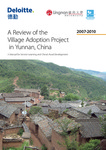
A review of the village adoption project in Yunnan, China : a manual for service-learning and China's rural development : 2007-2010
Deloitte 德勤 and Office of Service-Learning, Lingnan University
The Village Adoption Project in Yunnan was the first service-learning project jointly organized by a public institute of higher education and a private enterprise to focus on the development of China’s rural village. This is a valuable manual that systematically brings together the experience of the various organizations involved.
-
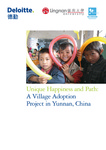
Unique happiness and path : a village adoption project in Yunnan, China
Deloitte 德勤 and Office of Service-Learning, Lingnan University
This book shares and celebrates the happiness and valuable experiences that the participants have gained in the past three years of the project. The unique happiness and path have made the Village Adaption Project in Yunnan a meaningful experience in the life of each participant.
-
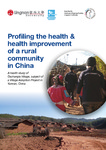
Profiling the health & health improvement of a rural community in China : a health study of Gezhangla Village, subject of a Village Adoption Project in Yunnan, China
Deloitte 德勤; Office of Service-Learning, Lingnan University; and Asia-Pacific Institute of Ageing Studies, Lingnan University
This study documents the community health profile of Gezhangla Village by identifying the health status of the residents, assessing their health needs and understanding the PHC system of the village, thus providing a foundation for the design of strategic plans to advance the actual health circumstances and healthcare system.
-

Placemarks : environments and aesthetics
Department of Visual Studies, Lingnan University
Preface
Visual Studies at Lingnan University answers the growing interest in Arts & Humanities research with relevance to society by emphasizing environmenal aesthetics, Chinese art, Art and Well-being, and "research expression." The exhibition "placemarks" is an example of research expression, for each of the works on display is a response to a clear question: "What Environment Do We Want?" This question defines the focus of the conference to which the exhibition, and the exchanges that it facilitates, contribute by means other than traditional forms of scholarly talk.
In organizing the conference titled "What Environment Do We Want? Environmental Aesthetics and Its Implications", at Hong Kong's Liberal Arts University and in the context of the Asian city's rapidly changing natural and urban environment, we were guided by an initial statement:
The goal is to bring together scholars from around the world to reflect on the question of what, from an aesthetic point of view, is a good environment. Although the question is arguably central to the theoretical field of environmental aesthetics, it also has a clear practical import. After all, one would expect actual decision-making in matters concerning the environment (for example, conservation) to be informed by an answer to the question. Consequently, we have decided to invite not just theoreticians, but also people who are actively involved in shaping our environment, such as architects and artists. We have also sought to include scholars who are able to offer an historical perspective on central issues, and scholars investigating how the aesthetic properties of the environment affect people's health and well-being. Finally, a balance is envisaged between a global and a local/regional perspective on the question of what environment is desirable from an aesthetic point of view.
Focusing on the media's impact on how we perceive nature, on changing concepts of home in the wake of widespread demolition and construction on the Chinese mainland and in Hong Kong, on the relations between "geographically dispersed places and people", and on the nature of water, the "placemarks" artworks do what accomplished art on public display does well: they ask the right sorts of questions; they invite those who engage with them to begin the process of seeking answers, through reflection, focused debate, and, indeed, the kind of research that is known as environmental aesthetics.
"What Environment Do We Want? Environmental Aesthetics and Its Implications" and "placemarks" were generously funded by a grant from the Lingnan University Conference Fund. We are grateful to the University, and to our Colleagues, for their support.
Mette Hjort
Rafael De Clercq
Conference organizers, Visual Studies
Printing is not supported at the primary Gallery Thumbnail page. Please first navigate to a specific Image before printing.