

The mismeasure of culture : why measurement invariance is rarely appropriate for research in social, cultural, and political psychology
Event Title
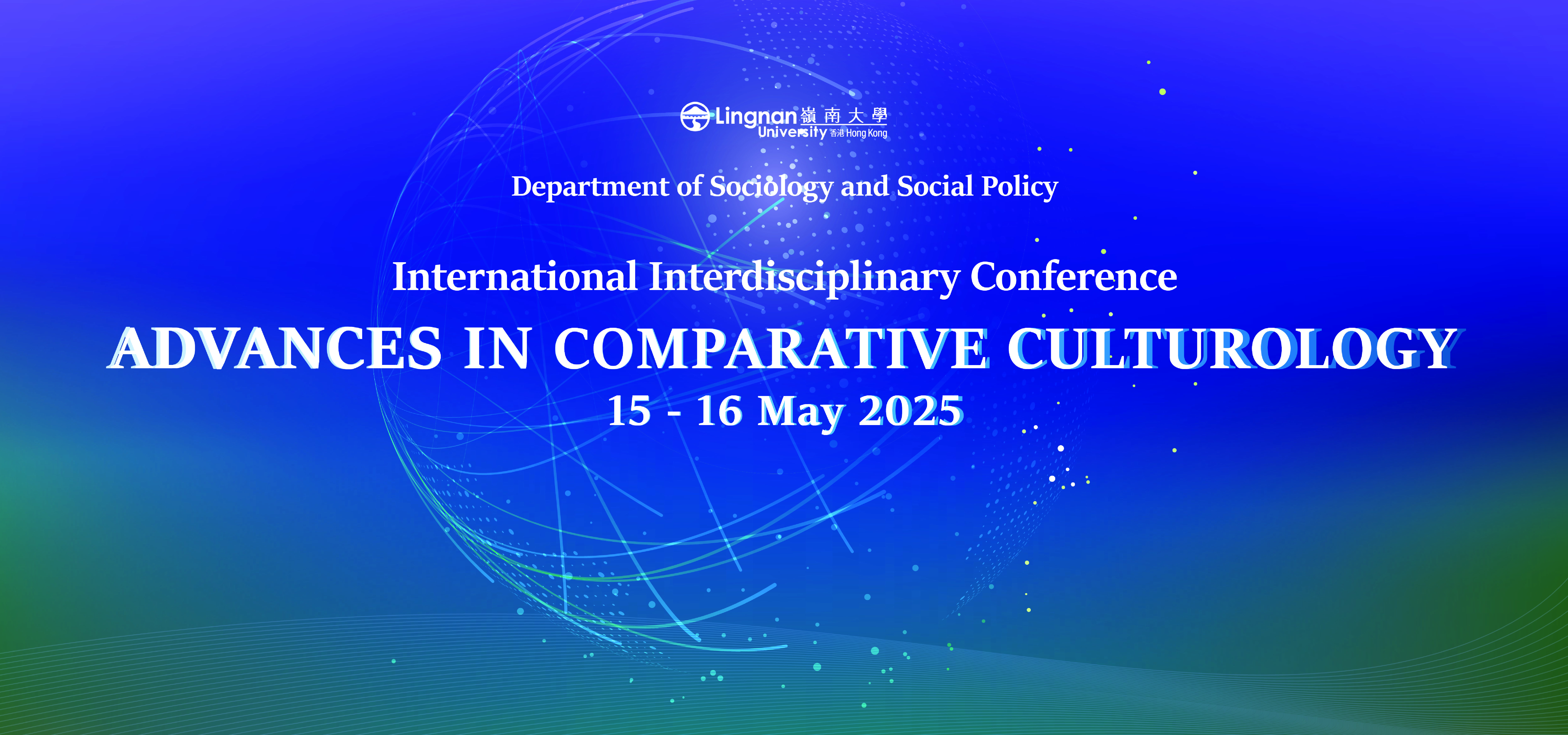
International Interdisciplinary Conference: Advances in Comparative Culturology
Location
MBG06, Lam Woo Lecture Theatre, Patrick Lee Wan Keung Academic Building, Lingnan University
Start Date
15-5-2025 4:45 PM
End Date
15-5-2025 5:15 PM
Language
English
Description
My talk critiques the indiscriminate application of measurement invariance in psychology. Despite the growing recognition of the need for cross-cultural validation of measures in psychological studies, a tension persists between proponents of measurement invariance and practitioners frustrated with these stringent standards and ambiguous recommendations. I argue that cultural constructs need not be equivalent or invariant as long as they demonstrate external validity at the group level. Measurement invariance emerged from concerns about fairness in high-stakes individual selections; however, its meta-theoretical assumptions are irrelevant to many (if not most) cross-cultural studies, where researchers aim to uncover group differences. I illustrate my point using the General System Justification Scale, which has recently faced criticism for lacking invariance. I show that external validation can ensure meaningful group differences without establishing invariance criteria. I suggest that researchers determine the purpose of scale use and clarify ontological assumptions before applying measurement invariance methods. At its core, the debate over the use of measurement invariance overlooks philosophical questions regarding how to theorize and study culture. These questions, in my opinion, need to be addressed to advance the field.
Document Type
Presentation
Recommended Citation
Kusano, K. (2025, May 15). The mismeasure of culture: Why measurement invariance is rarely appropriate for research in social, cultural, and political psychology. Presented at the International Interdisciplinary Conference: Advances in Comparative Culturology, Lingnan University, Hong Kong.
The mismeasure of culture : why measurement invariance is rarely appropriate for research in social, cultural, and political psychology
MBG06, Lam Woo Lecture Theatre, Patrick Lee Wan Keung Academic Building, Lingnan University
My talk critiques the indiscriminate application of measurement invariance in psychology. Despite the growing recognition of the need for cross-cultural validation of measures in psychological studies, a tension persists between proponents of measurement invariance and practitioners frustrated with these stringent standards and ambiguous recommendations. I argue that cultural constructs need not be equivalent or invariant as long as they demonstrate external validity at the group level. Measurement invariance emerged from concerns about fairness in high-stakes individual selections; however, its meta-theoretical assumptions are irrelevant to many (if not most) cross-cultural studies, where researchers aim to uncover group differences. I illustrate my point using the General System Justification Scale, which has recently faced criticism for lacking invariance. I show that external validation can ensure meaningful group differences without establishing invariance criteria. I suggest that researchers determine the purpose of scale use and clarify ontological assumptions before applying measurement invariance methods. At its core, the debate over the use of measurement invariance overlooks philosophical questions regarding how to theorize and study culture. These questions, in my opinion, need to be addressed to advance the field.
Additional Information
Speaker
Kodai KUSANO (New York University Abu Dhabi, UAE)
Kodai Kusano is a Postdoctoral Associate at New York University Abu Dhabi. Originally from Tokyo, Japan, he studied abroad in Utah, USA, during his undergraduate education to explore psychology and religious cultures. He completed his master's degree at San Francisco State University and his doctorate at the University of Nevada, Reno. By training, his discipline is social psychology, but he aims to integrate sociological and evolutionary perspectives into his research to better understand culture. His research examines the interplay between individuals, societies, and ecological systems, with a focus on their temporal dynamics. His interests span traditional social-psychological topics (including inequality, social hierarchy, power, and gender), which he approaches through interdisciplinary lenses. His current focus is on methodology, particularly cross-cultural methodology. His research programs aim to tackle long-standing controversies in social science methodology while advocating for simpler and more practical approaches to complex problems.